missing translation for 'onlineSavingsMsg'
Learn More
Learn More
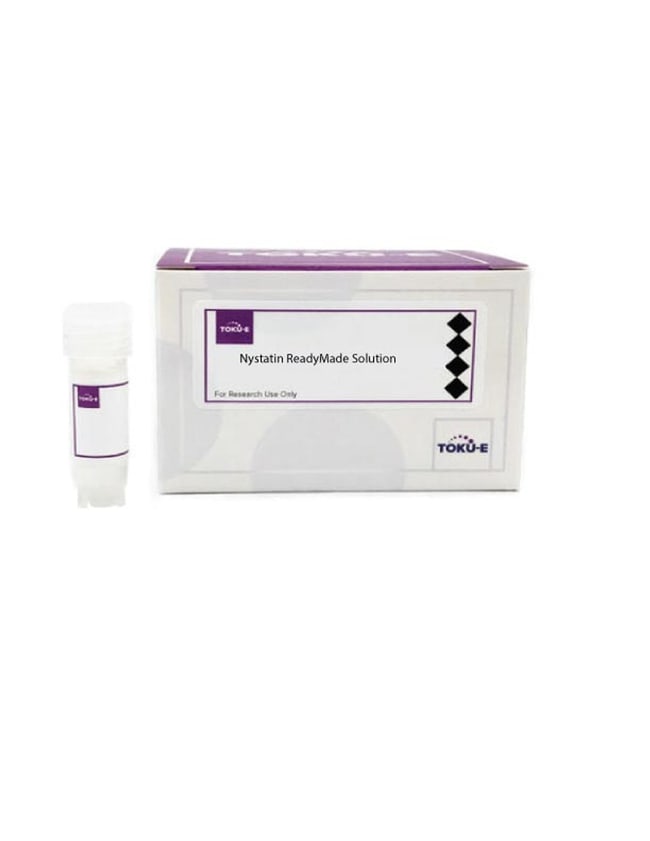
TOKU-E™ Nystatin ReadyMade™ Solution

Description
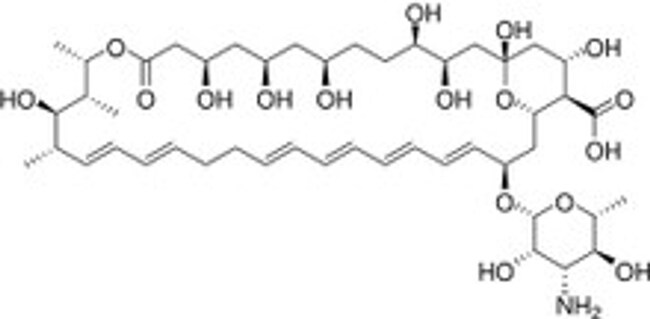
- CAS Number: 1400-61-9
- Molecular Formula: C47H75NO17
- Molecular Weight: 926.09 g/mol
- Storage Conditions: -20°C, Protect from light
- Form: Liquid
- Source: Streptomyces noursei and Streptomyces aureus
- Spectrum: Nystatin primarily targets fungi, yeasts, and mold. It is active against Candida species, but, in vitro, some species such as C. tropicalis can develop resistance. It is either fungistatic or fungicidal depending on the concentration of Nystatin, the pH of the medium, and the nature of the infecting organism. It has a slightly narrower spectrum than Amphotericin B
- Mechanism of Action: Nystatin binds ergosterol in the fungal cell membrane forming pores and increasing permeability. It is a channel-forming ionophore, meaning it forms a membrane-spanning pore in the fungal plasma membrane. The altered permeability is toxic to the fungi leading to growth inhibition or death. It has a similar mechanism to Amphotericin B. It is not active against bacteria since they do not contain sterols in their cell membrane
Spécification
Spécification
| CAS | 1400-61-9 |
| Nom chimique ou matériau | Nystatin A1 |
| Couleur | Colorless |
| Contenu et stockage | -20°C, Protect from light |
| Description | Nystatin ReadyMade™ Solution 20,000 to 40,000 units/mol in water |
| Concentration | 20,000 to 40,000 units/mL |
| Forme | Clear, colorless solution |
| Type de produit | Antibiotique |
| Stérilité | Stérile |
| Sterilization Method | Stérilisation par filtration |
| Afficher plus |
Nom du produit
En cliquant sur Soumettre, vous reconnaissez que vous pouvez être contacté par Fisher Scientific au sujet des informations que vous avez fournies dans ce formulaire. Nous ne partagerons pas vos informations à d'autres fins. Toutes les informations de contact fournies seront également conservées conformément à notre politique de confidentialité. Politique de confidentialité.
Vous avez repéré une opportunité d'amélioration ?