missing translation for 'onlineSavingsMsg'
Learn More
Learn More
Invitrogen™ Ephrin B3 Polyclonal Antibody
Description
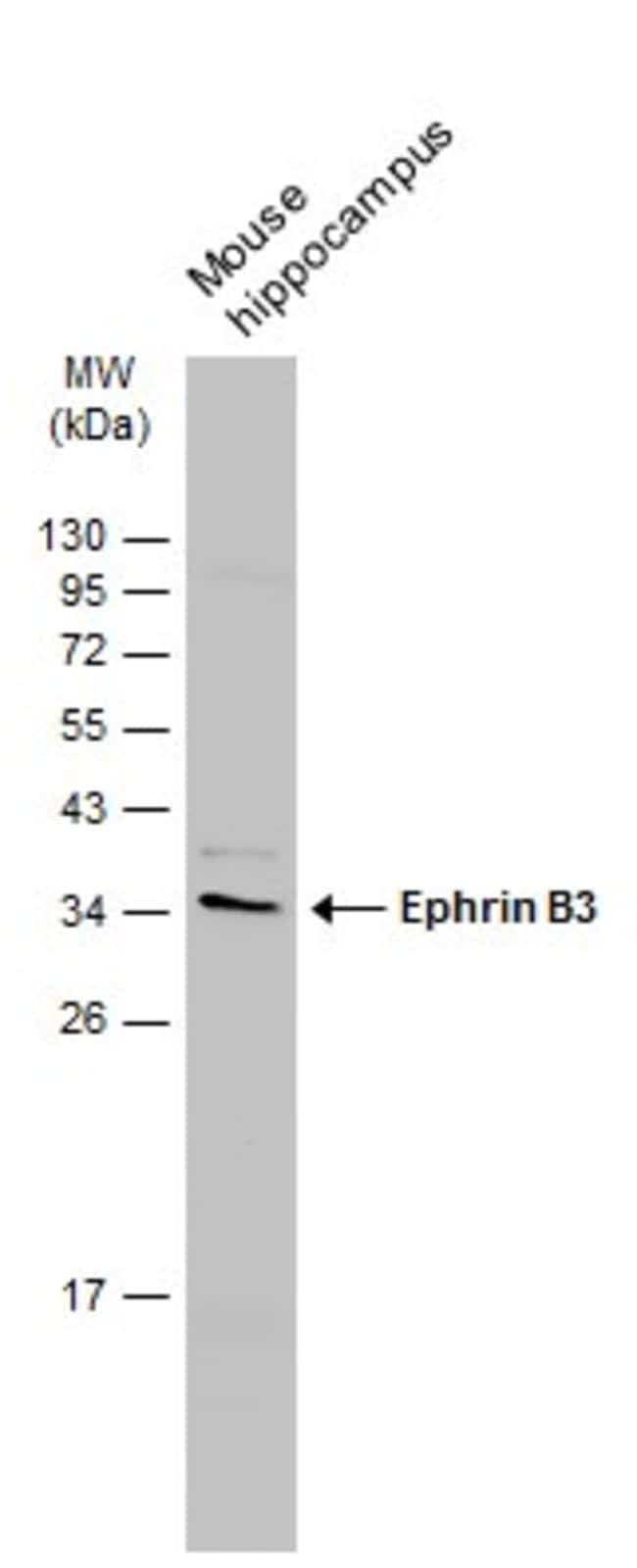
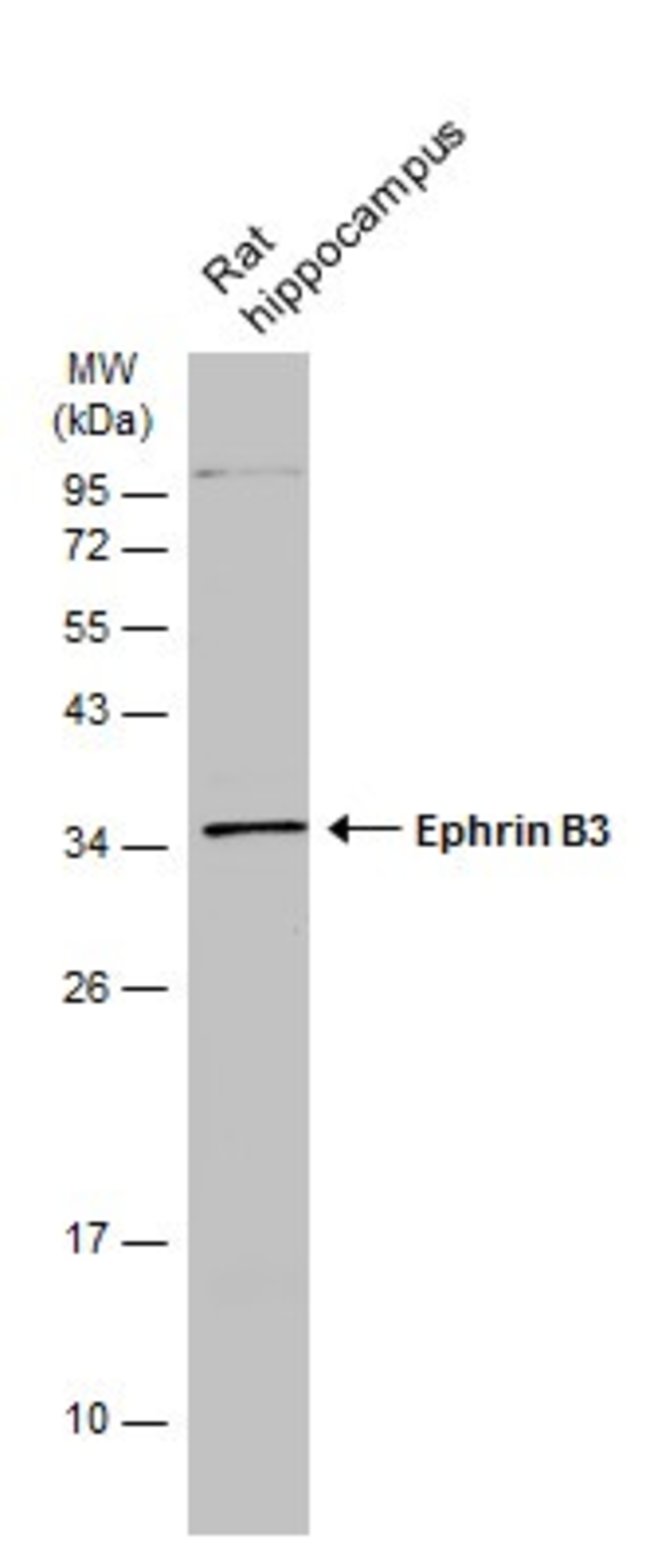
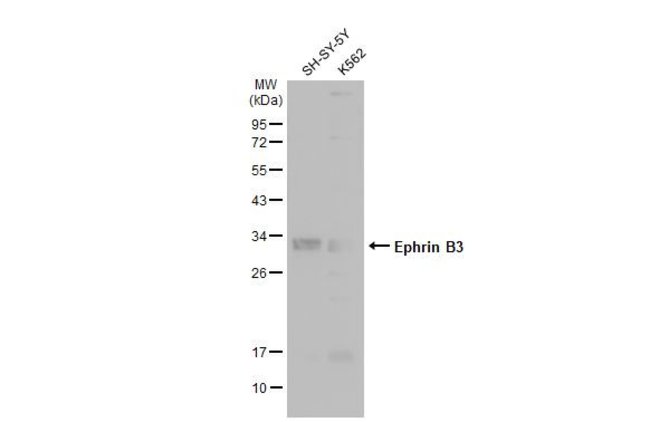
Recommended positive controls: 293T, A431, mouse hippocampus, rat hippocampus. Predicted reactivity: Mouse (100%), Rat (100%), Dog (100%), Cat (100%), Pig (100%), Bovine (100%). Store product as a concentrated solution. Centrifuge briefly prior to opening the vial.
EFNB3, a member of the ephrin gene family, is important in brain development as well as in its maintenance. Moreover, since levels of EFNB3 expression were particularly high in several forebrain subregions compared to other brain subregions, it may play a pivotal role in forebrain function. The EPH and EPH-related receptors comprise the largest subfamily of receptor protein-tyrosine kinases and have been implicated in mediating developmental events, particularly in the nervous system. EPH Receptors typically have a single kinase domain and an extracellular region containing a Cys-rich domain and 2 fibronectin type III repeats. The ephrin ligands and receptors have been named by the Eph Nomenclature Committee (1997). Based on their structures and sequence relationships, ephrins are divided into the ephrin-A (EFNA) class, which are anchored to the membrane by a glycosylphosphatidylinositol linkage, and the ephrin-B (EFNB) class, which are transmembrane proteins. The Eph family of receptors are similarly divided into 2 groups based on the similarity of their extracellular domain sequences and their affinities for binding ephrin-A and ephrin-B ligands.

Spécification
Spécification
| Antigène | Ephrin B3 |
| Applications | Western Blot |
| Classification | Polyclonal |
| Concentration | 1 mg/mL |
| Conjugué | Unconjugated |
| Formule | 0.1M tris glycine with 10% glycerol and 0.01% thimerosal; pH 7 |
| Expression | EFNB3 |
| Numéro d’ordre du gène | O35393, Q15768 |
| Alias de gène | EFL6; EFL-6; Efnb3; ELF-3; Elk-L3; EPH-related receptor transmembrane ligand ELK-L3; eph-related receptor tyrosine kinase ligand 8; ephrin B3; ephrin ligand B3; ephrin-B3; Epl8; EPLG8; LERK8; LERK-8; NLERK-2 |
| Symboles de gène(s) | EFNB3 |
| Afficher plus |
Nom du produit
En cliquant sur Soumettre, vous reconnaissez que vous pouvez être contacté par Fisher Scientific au sujet des informations que vous avez fournies dans ce formulaire. Nous ne partagerons pas vos informations à d'autres fins. Toutes les informations de contact fournies seront également conservées conformément à notre politique de confidentialité. Politique de confidentialité.
Vous avez repéré une opportunité d'amélioration ?